Ghat rounds, unpaid, unregistered
Four of us, three nights a week, blankets and a flask. No name, no bank account, no receipts — money came out of our own pockets and a WhatsApp group of eleven friends. It worked precisely because it was small enough to be unaccountable.
Four hundred meals a day, and month four
The lockdown emptied the ghats and filled them at the same time. We rented a kitchen and cooked for anyone who came. It ran for five months. In month four we ran out of money and had to halve the plates for eleven days, which nobody planned for and everybody noticed.
The first written slate — fodder on credit
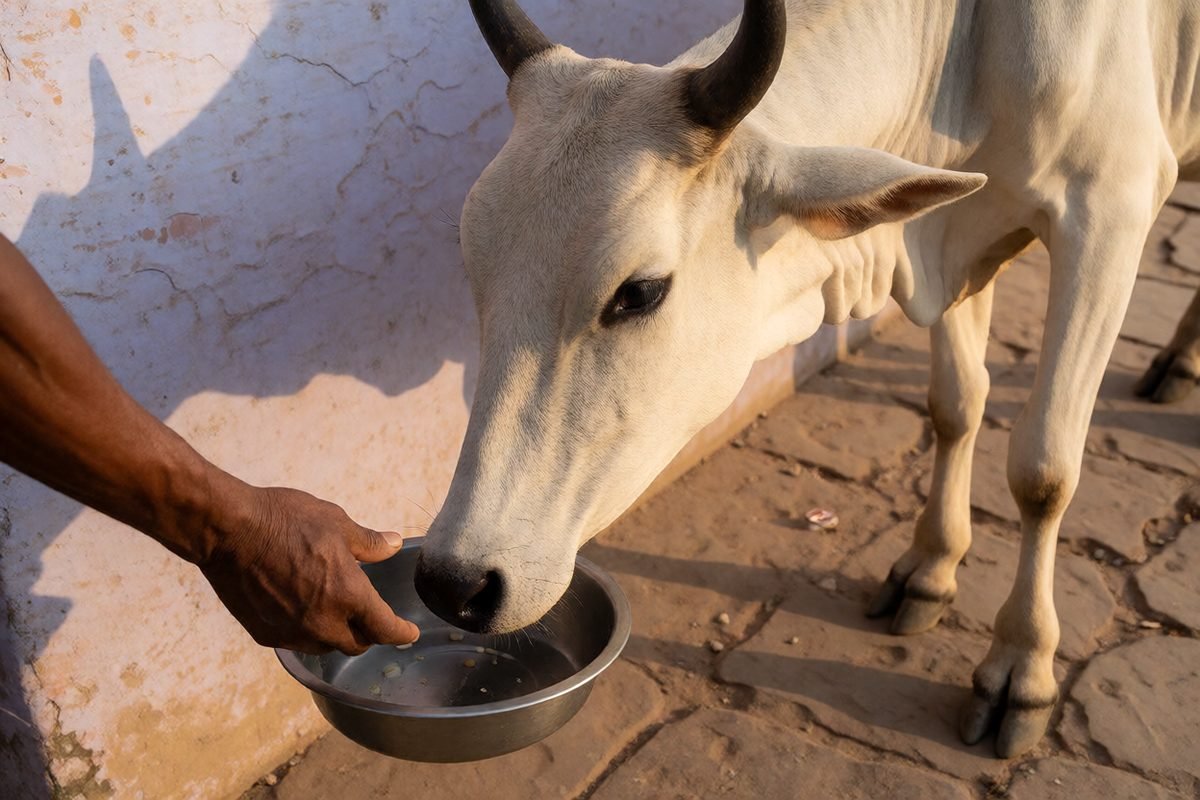
A widow in Sarai Mohana had a dry cow, no cash, and a feed merchant who had stopped answering. We paid the merchant and wrote the amount in a school exercise book with her thumbprint. Eleven households by the end of that year. The slate is still a physical book, still thumbprints, still repaid in dung, milk or labour — and still cleared without a word when a household collapses.
Sixty-one nights of winter shelter
Quilts, ground sheets and a bonfire on two ghats from the first week of December. We counted the nights because counting was the only accountability we had. Sixty-one of them, and one death on the seventy-fourth night, in February, after we had stopped.
The counter at the gate
Two of us had been feeding families outside Sir Sunderlal out of tiffin carriers. A hospital orderly gave us a corner of wall and a stool. It became a rented counter, a stove and a shift rota. The first month served 900 plates; the second, 1,700, because word travels at a gate faster than any poster.
Abandoned notebooks
In June, a school dumped four almirahs of half-used notebooks into a skip because the session had ended. A volunteer pulled them out. We spent three weekends tearing out the written pages, sorting the rest by size, and reissuing them before the July session. Three hundred thousand pages went back into circulation that year. It is the least glamorous thing on this page and the one we are most pleased with.
The callout line, and a lease we could not sign
A 24-hour number for downed cattle, staffed by three people who took turns sleeping with the phone. That same autumn we found the right house for the first healing home and could not sign the lease, because there was no entity to sign it — only seven individuals and a group chat.
Incorporation
Section 8 company, filed. Not because we wanted a letterhead, but because informal work had hit a hard ceiling: no bank account in the organisation's name, no lease, no ability to employ a house mother or a cook legally. The four pillars were named at the same time, mostly to stop us drifting into a fifth.